

Looking for a Lentil Substitute? Explore this guide to help you find the best swap for your recipe, from chickpeas and split peas to quinoa and black beans.
Jump to:
What are lentils?
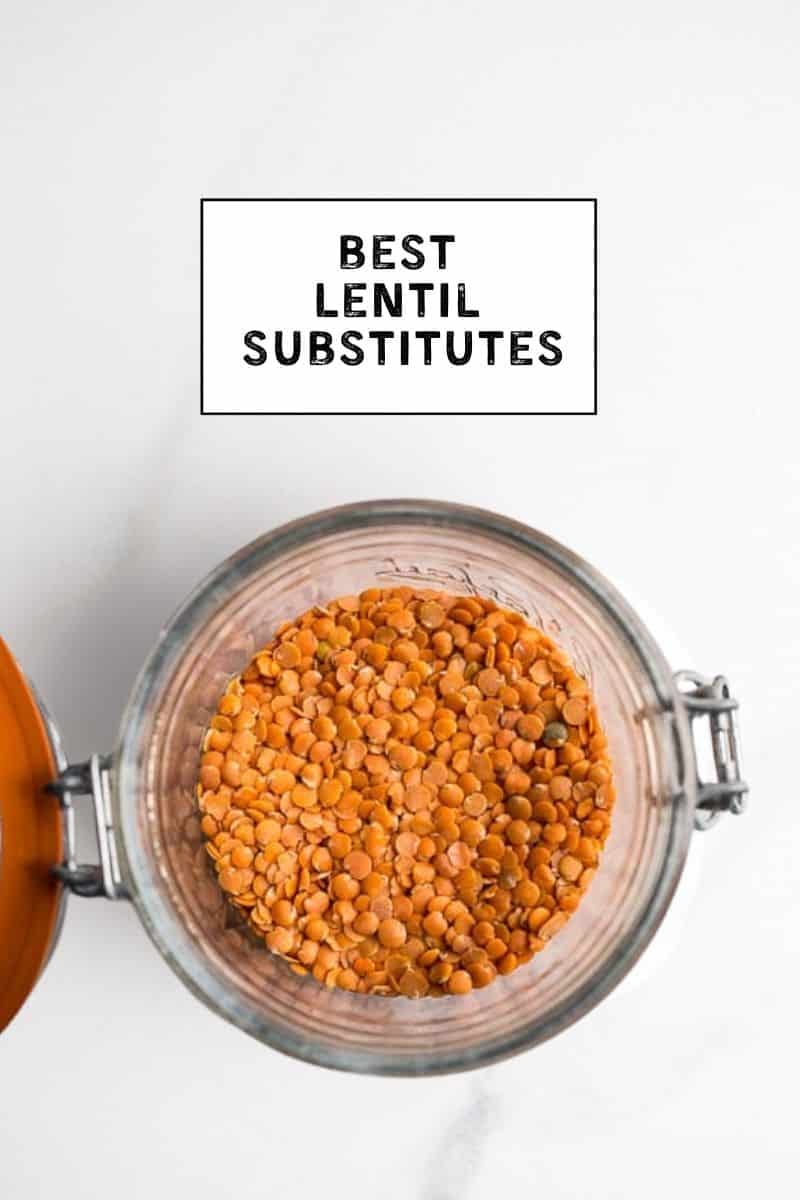
Lentils are the edible seeds (i.e. pulses) from the legume Lens culinaris. They are rich in plant-based protein and fiber, making them a staple in many cuisines around the world. Common varieties include beluga, French (Puy), green and brown. You can also find split lentils (e.g. red split lentils) where the lentils have been halved and their seed coat removed. Generally, lentils are quite small and cook much quicker than many other pulses, especially since they don't require soaking, with split lentils being the quickest to cook.
Uses
Due to their high nutrient density, quick cooking, and mild, earthy flavor, lentils are incredibly versatile to use in your cooking.
- Cooked for adding to salads: Lentils (typically whole, not split) can be boiled in water or seasoned broth until tender then drained, cooled and scattered into salads or marinated in a vinaigrette as a nutritious side dish.
- Stewed into curries and soups: Adding lentils into hearty soups or curries helps to thicken them and results in a hearty texture. Split lentils work especially well for this as they break down easily and lend a creamy texture.
- As a ground meat substitute: Cooked whole lentils have a firm, meaty texture which makes them perfect for using in veggie burgers or meatballs, plant-based ragu, vegetarian casseroles and taco fillings.
- Blended into batters: In Indian cuisine, lentils and rice are blended into a thin batter and fermented, then spread thin on a hot skillet and cooked to make a crisp, rolled crepe known as dosa. This also works for other batters such as these Red Lentil Pancakes.
- Puréed into dips and spreads: Split lentils can be cooked until very tender then blended up to make a creamy hummus-style dip. Whole, cooked lentils are can be blended up with other ingredients like mushrooms and onions to make vegetarian pâté.
What is a good substitute for lentils?
If you haven't got any lentils in the pantry, here are some ideas for what to swap them out for:
Chickpeas
Chickpeas are also members of the legume family but are much larger than lentils. If using dry chickpeas, they must be soaked overnight before cooking and will take much longer to cook. They make a good substitute for whole lentils in salads and soups, or can be mashed and used in veggie burgers and dips.
To substitute, use a 4:5 ratio (2 cups cooked lentils to 2.5 cups cooked chickpeas).
Split Peas
With a similar size and texture to lentils, these pulses don't require soaking, and take slightly longer to cook. They make a particularly good substitute for split lentils, especially in stews or curries.
To substitute, use a 1:1 ratio (1 cup cooked lentils to 1 cup cooked split peas).
Black Beans
Black beans have an earthy, nutty flavor and deep color which makes them great for replacing brown or puy lentils in salads or ground meat substitutes (especially when lightly mashed). They're larger than lentils so require soaking before cooking.
To substitute, use a 4:5 ratio (2 cups cooked lentils to 2.5 cups cooked black beans).
White Beans
Creamy, tender and pale, these legumes are larger than lentils and require soaking before cooking. They work best in salads, soups and dips.
To substitute, use a 4:5 ratio (2 cups cooked lentils to 2.5 cups cooked white beans).
Quinoa
A high protein, quick-cooking pseudocereal with a small grain size that becomes soft and fluffy when simmered. It works well to replace lentils veggie burgers, salads and soups although it won't thicken stews as much as split lentils do.
To substitute, use a 1:1 ratio (1 cup cooked lentils to 1 cup cooked quinoa).
Top tips
Here are some things to consider when swapping out lentils in a recipe:
- Texture of the dish: If split lentils are added to thicken (like in dal or hearty soups), choose split peas as they break down easily into a creamy texture. If lentils are used for their 'meaty' texture, use cooked chickpeas or black beans as they hold their shape well.
- Flavor: Earthier lentils like Puy or brown lentils are best replaced with flavorful swaps like black beans or chickpeas like for this lentils and rice recipe. For a milder taste, go with quinoa or white beans.
- Cook time: Lentils don't require soaking and are often added dry, straight into soups or curries. If you're using dried beans you'll need to soak them overnight before cooking. In soups or curries, soaked beans may benefit from a pre-cook in boiling water before being drained and added to the soup/curry to finish cooking. This will prevent the other ingredients in the dish becoming overcooked.
- Liquid absorbency: Some swaps may need more or less water than lentils depending on what you're using, so keep an eye on the pot to make sure it isn't running dry. You can always top up with water, as needed, to rectify this. If using canned beans in a recipe calling for dry lentils, they won't absorb water like the lentils do, so you may need to reduce the total amount of liquid in the recipe.
FAQs
Whole lentils such as Puy or brown lentils have a meaty texture and hold their shape when cooked. They're also high in plant-based protein. This makes them great for replacing ground beef (or using as a low-cost meat 'extender') in many recipes.
In curries like dal where lentils are the star of the dish, you can use split peas. They will break down in a similar fashion to split red lentils, thicking the curry and giving it a creamy texture. If whole lentils are used in a curry for their firm texture, swap them out for chickpeas instead.
Cooked lentils have a firm texture and small size that works well in hearty salads. You can try using cooked quinoa as a quick swap, or try canned chickpeas or white beans, instead.
Conclusion
Lentils are a cheap and versatile ingredient with a variety of culinary uses. Several alternative legumes make great substitutes, as does quinoa in certain applications. Make sure you take into consideration the texture, flavor and cooking time to choose the right substitute for your recipe.






Leave a Reply