

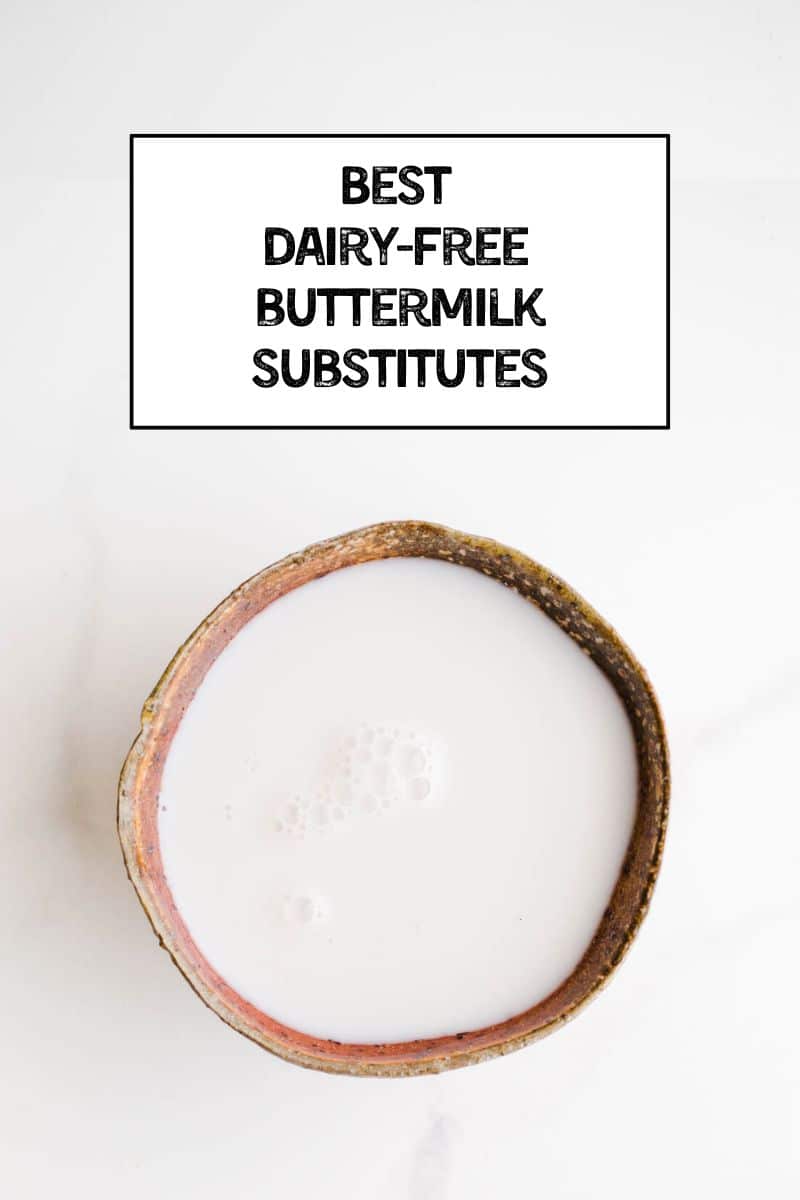
Looking for a dairy-free buttermilk substitute? Explore our guide to find the best dairy-free buttermilk alternatives such as lemon juice and plant milk, dairy-free yogurt, or silken tofu. Learn how to make substitutions for similar results in a variety of recipes.
Uses
Buttermilk adds a gentle tang and helps create light, tender textures in both sweet and savory recipes. Its natural acidity reacts with baking soda and baking powder for lift. This makes it a key ingredient in classic comfort bakes and creamy dishes. Here are some common uses of buttermilk:
Pancakes, waffles, and muffins: Give a fluffy, soft crumb, tender texture, and subtle tang to regular and gluten-free pancakes, grain-free scones, waffles and muffins.
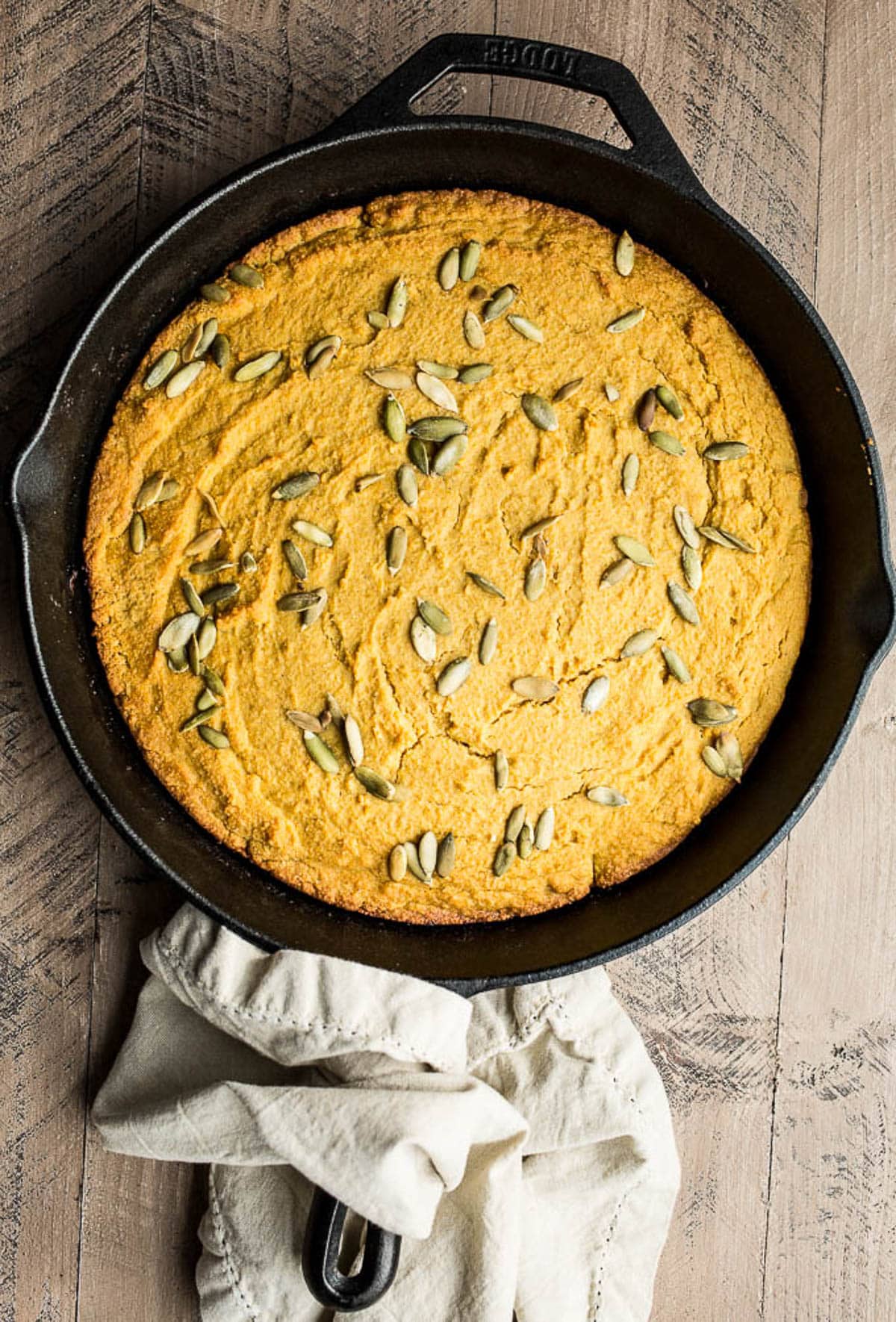
Quick breads and biscuits: Buttermilk reacts with leavening agents for a higher rise and tender bite just like in this sweet potato cornbread.
Cakes and cupcakes: Adds moisture and balances sweetness in chocolate or spice cakes.
Fried chicken or tofu: The lactic acid in buttermilk tenderizes proteins and helps coatings cling for crisp, flavorful crusts.
Fish, fries, onion strings, or veggie fritters: It adds moisture while keeping batter light like in these gluten-free onion strings.
Salad dressings: Buttermilk provides tang without heaviness to creamy dressings just like in this dairy-free ranch dressing.
Dips and slaws: Its acidity brightens creamy bases.
Glazes: Mixed with powdered sugar for a light, tangy icing.
What is the best substitute for dairy-free buttermilk
If you are looking for a healthy alternative, these simple ingredients are the best options for replacing buttermilk in dairy-free or vegan baking and other recipes. Acidic ingredients like lemon juice or apple cider vinegar create a chemical reaction when mixed with a plant-based milk alternative that replicates the properties of regular buttermilk.
1. Plant Milk + Lemon Juice or Vinegar
Combine 1 cup unsweetened dairy-free milk (almond, oat, soy, coconut, or cashew milk) with 1 tablespoon lemon juice or apple cider vinegar or white vinegar. Stir and let sit for 5-10 minutes to curdle slightly. This option is great for pancakes, muffins, quick breads, and cakes. Apple cider vinegar will give the mixture a more tangy flavor than regular white vinegar.
To substitute, use a 1:1 ratio for buttermilk.
2. Dairy-Free Yogurt + Water or Plant Milk
Whisk ¾ cup unsweetened dairy-free yogurt with ¼ cup water or plant milk until smooth. This vegan buttermilk substitute is best for dressings, marinades, cornbread, and quick breads.
To substitute, use a 1:1 ratio.
3. Dairy-Free Sour Cream + Water or Plant Milk
Mix ¾ cup dairy-free or vegan sour cream with ¼ cup water or plant milk until pourable.
To substitute, use a 1:1 ratio.
4. Silken Tofu + Lemon Juice
Blend ½ cup silken tofu, ½ cup water or plant milk, and 1 tablespoon lemon juice until smooth. This vegan substitute is best for savory dishes, creamy batters, and recipes needing extra protein or density.
To substitute, use a 1:1 ratio.
Top tips
- Let your mixture sit for 5-10 minutes before using to allow it to curdle slightly.
- Always choose unsweetened non-dairy milk and yogurts.
- When baking gluten-free, the acid in buttermilk helps activate leavening-so don't skip it!
FAQs
Yes, though options are limited. The most well-known is Mill It Plant-Based Buttermilk, made from fermented ancient grains to mimic the tang and texture of traditional buttermilk. It's vegan, gluten-free, and soy-free.
Yes. Lime juice works just as well as lemon juice when making homemade vegan buttermilk. Both are acidic enough to curdle plant milk and create that classic tangy flavor.
Conclusion
From fluffy pancakes to tender gluten-free biscuits, these dairy-free buttermilk substitutes make it simple to recreate the tang and texture of traditional buttermilk, no dairy required. With a few pantry staples, you can mix up the perfect plant-based version for any recipe and keep your baking light, flavorful, and allergen-friendly.
Leave a Reply